
OCR Key-Value Extraction: Turning Unstructured Documents into Data
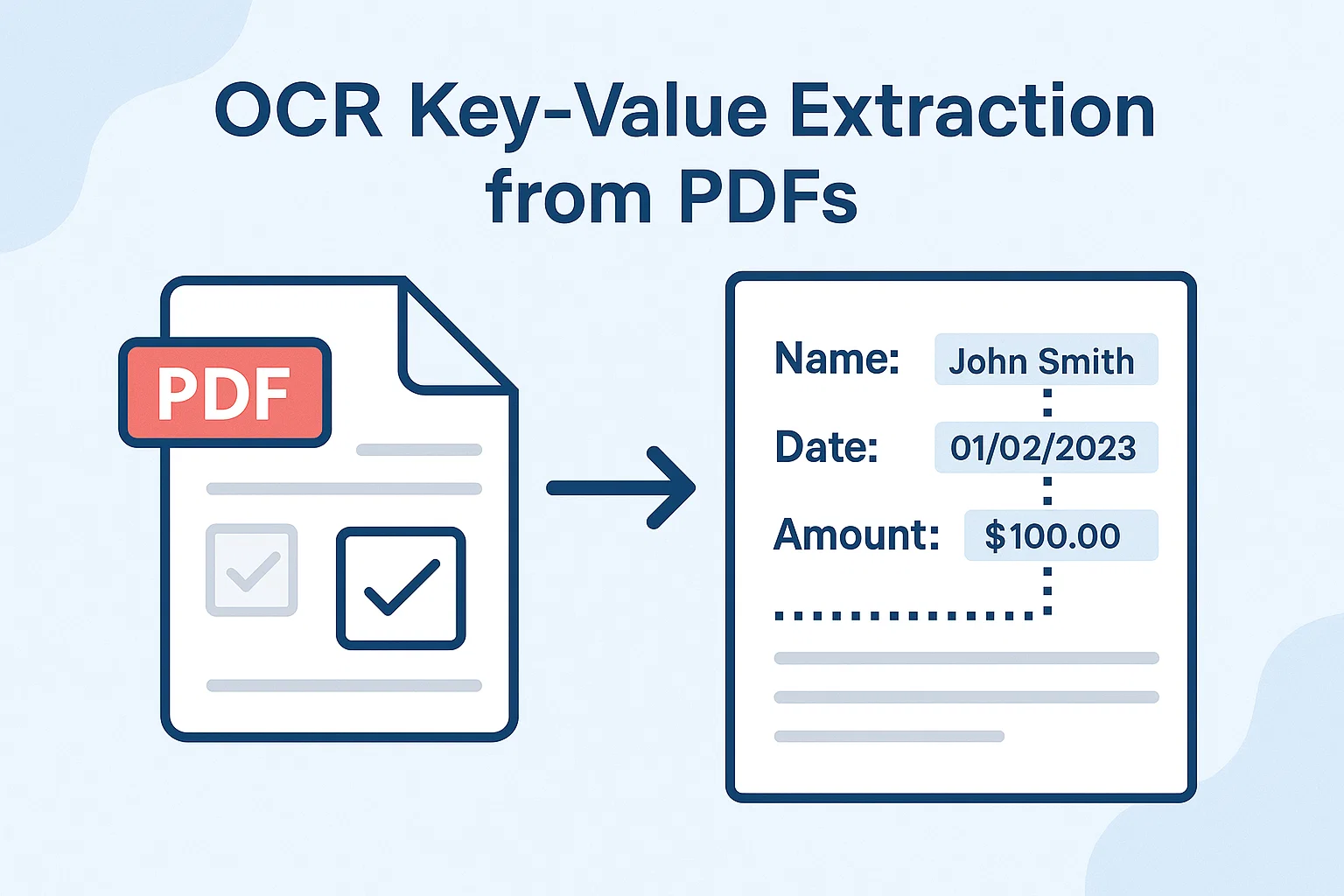
In the modern enterprise, data is the most valuable asset—but much of it remains trapped in unstructured formats like PDFs and scanned images. Optical Character Recognition (OCR) has evolved from simple text conversion into "Intelligent Document Processing" (IDP). At Codexal, we help organizations automate the extraction of key-value pairs (KVP), turning thousands of invoices, contracts, and IDs into actionable database entries in seconds.
1. From Flat Text to Structured Intelligence
Traditional OCR engines like early versions of Tesseract were focused on "reading" text—simply outputting a string of characters. But knowing that a document contains the word "Total:$100" isn't enough for a database. You need to know that Total is the Key and $100 is the Value. This requires Spatial Awareness: understanding the physical layout of the document.
By analyzing the coordinates of every word, our algorithms can group "Label-Value" pairs based on proximity and alignment, a technique we also apply in our UX Design workflows to understand user eye-tracking.
2. Advanced Architectures: LayoutLM and Donut
When documents are complex—think of tables with nested rows or multi-column bank statements—simple coordinate matching fails. This is where Deep Learning comes in. Models like LayoutLM combine text recognition with visual cues (like lines and separators) to "understand" the document structure. Even more advanced are "OCR-free" models like Donut, which process the image directly into JSON without an intermediate text step.
"invoice_number": "INV-2026-001",
"total_amount": 1250.00,
"currency": "SAR",
"confidence_score": 0.985
}
3. Real-World Applications
The applications for automated extraction are limitless across various industries:
- Fintech: Automated KYC (Know Your Customer) by extracting data from National IDs and Passports. See our Fintech Security guide for more.
- Logistics: Processing thousands of Bills of Lading and shipping manifests daily.
- Legal: Extracting clauses, dates, and names from high-volume contracts for better compliance tracking.
4. Maximizing OCR Accuracy and Reliability
No OCR is 100% perfect. Achieving production-grade reliability requires a hybrid approach. We implement "Confidence Scores" for every extracted field. If the system is only 70% sure about a handwritten signature or a blurry date, it automatically routes that specific document to a human-in-the-loop (HITL) for verification. This ensures 100% data integrity for critical systems.
Conclusion: Scaling Your Data Entry
The manual entry of document data is a bottleneck for any growing business. It’s prone to human error and doesn't scale. By implementing custom-trained OCR pipelines, you can reduce processing time by 90% and allow your team to focus on high-level analysis. Data is the fuel for AI, and OCR is the pump that extracts it from your legacy files.
Ready to automate your document processing? Explore our AI Services or contact us for a pilot project on your specific forms.